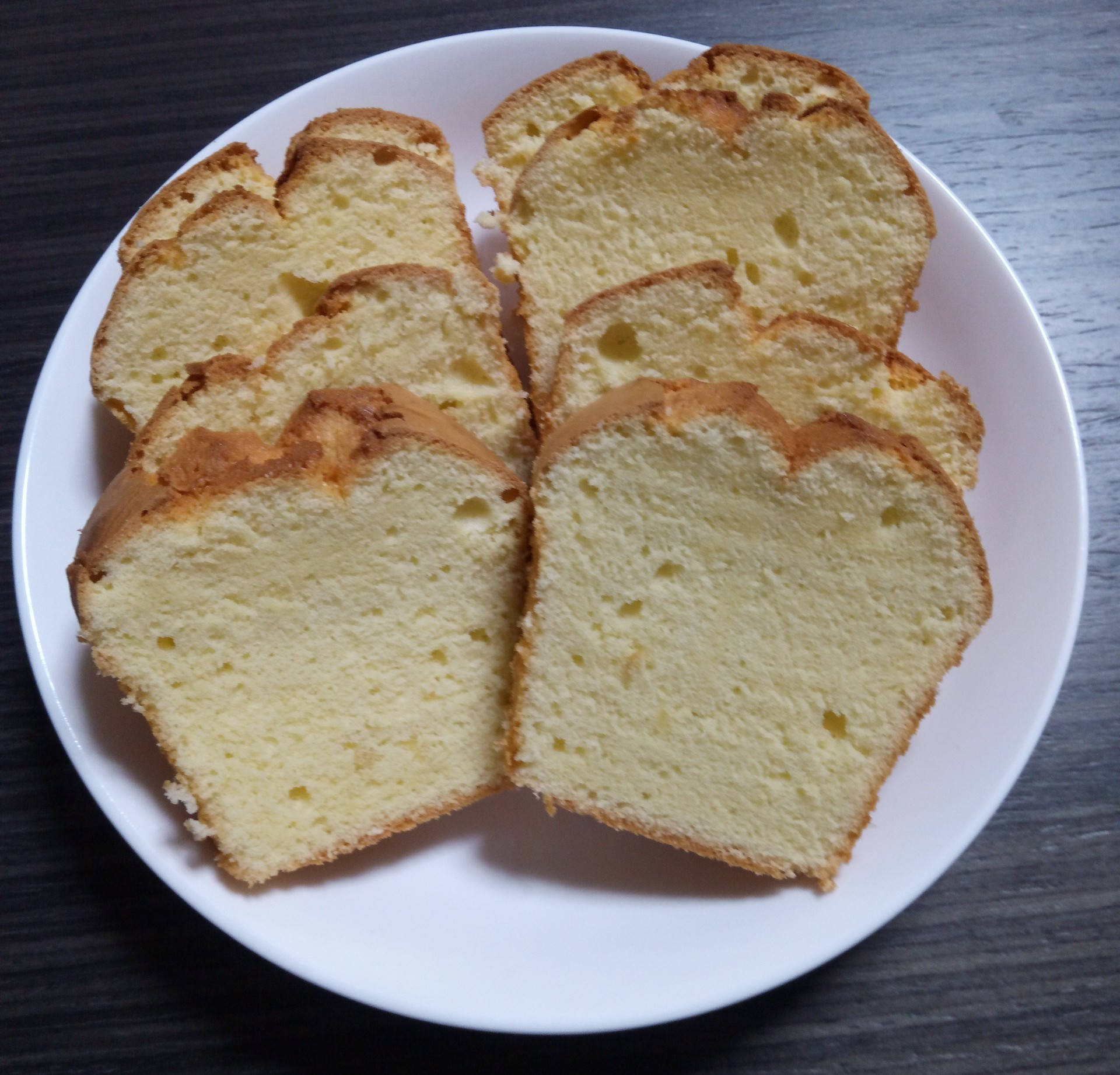
In this trial, We increased the amount of milk to 20g to see how it affects the final texture of the pound cake. Using the same method as before, folding in meringue at the final stage and allowing it to cool in the mold, we achieved a surprisingly light and airy result.
Increasing the liquid content typically makes the cake softer, but by keeping it in the mold until the initial heat dissipated, I successfully prevented the sides from collapsing.
CONTENTS
Ingredients & Nutrition
| # | Ingredient | Amount (g) | Calories (kcal) | Cost (Est.) | Notes |
| 1 | Egg (M size) | 60g | 91 | ¥20 | 1 whole egg |
| 2 | Olive Oil | 20g | 184 | ¥28 | |
| 3 | Milk | 20g | 13 | ¥4 | |
| 4 | Sugar | 50g | 194 | ¥15 | |
| 5 | Flour | 50g | 184 | ¥10 | |
| Total | 200g | 666kcal | ¥77 |
Gemini の回答
WordPressにそのまま貼り付けられるよう、SEOを意識した構成とMarkdown形式で作成しました。エンジニアらしい「検証(Experiment)」というニュアンスを込めつつ、読みやすいレシピ記事に仕上げています。
Fluffy Milk Pound Cake: How 20g of Milk Creates the Perfect Texture
In this experiment, I increased the amount of milk to 20g to see how it affects the final texture of the pound cake. Using the same method as before—folding in meringue at the final stage and allowing it to cool in the mold—I achieved a surprisingly light and airy result.
Increasing the liquid content typically makes the cake softer, but by keeping it in the mold until the initial heat dissipated, I successfully prevented the sides from collapsing.
Ingredients & Nutrition
| # | Ingredient | Amount (g) | Calories (kcal) | Cost (Est.) | Notes |
| 1 | Egg (M size) | 60g | 91 | ¥20 | 1 whole egg |
| 2 | Olive Oil | 20g | 184 | ¥28 | |
| 3 | Milk | 20g | 13 | ¥4 | |
| 4 | Sugar | 50g | 194 | ¥15 | |
| 5 | Flour | 50g | 184 | ¥10 | |
| Total | 200g | 666kcal | ¥77 |
Note: Calories and prices are approximate values.
Step-by-Step Instructions
(1) Prepare the Meringue Whisk the egg white with a hand mixer for about 1 minute until stiff peaks form. Add 10g of sugar and continue whisking for another few dozen seconds until the mixture becomes white and glossy. (The sugar is essential to prevent the air bubbles from collapsing).
(2) Mix the Wet Ingredients In a separate bowl from the meringue, combine 1 egg yolk, 40g of sugar, 20g of oil, and 20g of milk. Mix with the hand mixer for about 1 to 2 minutes.
(3) Combine the Flour Add 50g of flour to the yolk mixture and mix with the hand mixer for 1 to 2 minutes. (Since this recipe uses 20g of milk, the batter is thin enough to use a hand mixer, though folding it with a spatula would also be sufficient).
(4) Fold in the Meringue Add the meringue from step (1) into the batter. Using a spatula, fold gently until the color is uniform. Be careful not to deflate the meringue during this process.
(5) Baking Pour the batter into the cake mold and tap the bottom of the mold about 10 times to release air bubbles. Place it in the oven (preheated to 180°C). Bake at 180°C for approximately 10 minutes, then reduce the temperature to 160°C and bake for another 20 minutes.

(6) Cooling and Removal After letting the cake cool slightly (until the initial heat dissipates), remove the pound cake from the mold. There was almost no shrinkage or “caving in” on the sides. Furthermore, it achieved a moist texture immediately, similar to the texture you get after wrapping a cake and letting it sit for a full day.

(7) Final Result Finally, slice the pound cake. The interior was not sticky or soggy, but beautifully fluffy. This experiment confirms that adding more liquid to the pound cake results in a successful, airy finish.
Experimental Results & Conclusion
Preventing Structural Collapse
After letting the cake cool slightly in the mold, I removed it. There was almost no shrinkage or indentation on the sides. Furthermore, the cake achieved a moist texture immediately, similar to the “rested” texture you get after wrapping a cake and leaving it for a day.
The Final Texture
When sliced, the interior was not sticky but beautifully fluffy. This experiment confirms that increasing the moisture content (20g of milk) is a successful way to achieve a lighter, more delicate pound cake without sacrificing structural integrity.


コメント