
Minestrone is a versatile Italian classic, usually relying on the sweetness of vegetables. This time, I attempted a high-protein version using canned sardines. While sardines are incredibly healthy, they possess a strong character that can easily overwhelm other ingredients.
The result was an insightful lesson in “flavor integration”—or in this case, the lack thereof. Here is the breakdown of my experiment.
Sardine Minestrone Recipe (Ingredients)
| # | Ingredients | Grams (g) | Calories (kcal) | Price (yen) |
| 1 | Water | 800 | 0 | ¥0 |
| 2 | Mixed Vegetables | 350 | 249 | ¥200 |
| 3 | Diced Tomatoes | 300 | 84 | ¥100 |
| 4 | Canned Sardines | 140 | 373 | ¥150 |
| 5 | Sake | 100 | 80 | ¥44 |
| 6 | Red Wine | 100 | 73 | ¥55 |
| 7 | Olive Oil | 30 | 276 | ¥10 |
| 8 | Tomato Ketchup | 30 | 36 | ¥13 |
| 9 | Consommé | 20 | 45 | ¥48 |
| 10 | Herb Salt | 4 | 4 | ¥22 |
| – | (Total) | 1874g | 1220kcal | ¥642 |
Calories and prices are approximate values.
Sardine Minestrone Recipe (Instructions)
・First, I put 30g of olive oil in a pot and sautéed 350g of mixed vegetables.

・Next, I added 800g of water, 20g of consommé, 30g of ketchup, and 4g of herb salt, and boiled it until it came to a boil.
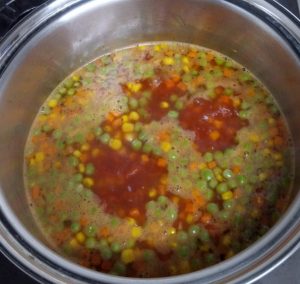
・Here, I added 140g of canned sardines, along with 100g of red wine and 100g of sake to eliminate the fishy smell, and simmered it for about 10 minutes.

・ Unfortunately, the finished dish still had a fishy smell. I tried to suppress it with sake and red wine, but it didn’t work. The tomatoes and red wine created a robust minestrone flavor, but the fish seemed to exist alongside it, almost as a separate entity. I really felt the high degree of difficulty.
🧪 Why the Flavors Remained “Separate”
1. The Persistence of “Fishiness”
Despite adding 200g of alcohol (Sake and Red Wine), the distinct smell of the sardines remained. In cooking chemistry, simply adding liquid to a boiling pot doesn’t always neutralize fish oils. To truly “deodorize” sardines, the alcohol needs to evaporate along with the smell, or the fish should be seared/treated before joining the soup.
2. The Lack of Emulsification
I noticed that the tomato base and the fish existed as “separate entities.” Because sardines are oily and the soup is water-based, without a strong emulsifying bridge (like mashed aromatics or a thicker roux), the flavors failed to unify.
3. Complexity of Difficulty
Integrating canned fish into a delicate vegetable soup proved to be a “High Difficulty” task. The robust tomato and red wine notes couldn’t quite mask the heavy, metallic profile of the sardine.
💡 Future Debugging (Improvement Plan)
To solve the “Separate Flavor” issue in the next version:
-
Searing: Try sautéing the sardines briefly with garlic and ginger in olive oil before adding the water. This creates a “Maillard reaction” that alters the aroma.
-
Acidity Adjustment: Adding a squeeze of fresh lemon or a teaspoon of balsamic vinegar at the very end can help “cut” through the fishy oiliness.
-
Aromatics: Increasing the amount of dried herbs (oregano or thyme) might bridge the gap between the earthiness of the vegetables and the intensity of the fish.


コメント